Showing posts with label American Plate. Show all posts

American Plate - Bite #55: Cracker Jack

Tuesday, January 27, 2026 0 comments

Sometimes, it seems as if some of these American Bites caught on in the popular consciousness because of sheer, dumb luck. A spark hit at just the right time and place, and suddenly, it's an American institution. Sometimes, though, it takes hard work and a string of innovations to build something from an idea to an icon. Cracker Jack definitely belongs to that latter category. People have always found things to snack on, but until Cracker Jack came along, it was usually fruit, cheese, or nuts.

In 1872, Frederick Rueckheim opened a popcorn/candy business with his brother in Chicago. Innovation #1: Experimenting with just the right combination of popcorn, peanuts, and molasses to find one that was tasty, and that wouldn't fuse into an unchewable mass. The snack was a hit at the Chicago World's Fair, so the brothers trademarked the name ("crackerjack" meaning something super-cool) and expanded the business in 1896. Transporting the mixture in warm weather was an issue, though. Innovation #2: A friend of theirs named Harvey Eckstein introduced the brothers to packaging the snack in double-layered wax paper inside individual serving-sized sealed boxes. It worked so well that Eckstein's name joined the company.

Innovation #3: A hit song. Though cracker jack had been a standard offering at baseball parks for a time, once the now-familiar tune name checking it was penned around 1908, there was no stopping its cultural imprint. There's always way to improve on advertising, though, and the Rueckheims copied the Quaker Oats idea of including a coupon in each box. Innovation #4: Then they hit upon the idea of including a little toy or surprise, instead. The rest is history, and Cracker Jack stands as America's first mass-produced snack food. 


That said, Cracker Jack seems to have left its cultural import back in the '80s. You don't see or hear much about people eating it anymore, and I haven't seen it for sale at a ballpark in years. In fact, I couldn't even buy it from the store; I had to order some online. So how was it once I got it? Kinda not as good as I remember. There are other caramel corn mixes at supermarkets that are as good or better, and sadly, the prize was worthless as well - just a sticker that promised additional prizes for collecting more. So maybe Cracker Jack's days in the sun are over, but it's sure still a testament to American innovation.

Read more »

American Plate - Bite #54: Cold Cereal

Sunday, June 15, 2025 0 comments

There have probably been ingredients and dishes throughout human history that were remarkably delicious or healthy, but without a confluence of events to bring them widespread attention, they just faded into obscurity. When the fates align, however, something can burst onto the scene and stay there. Cold cereal might have just sat in the realm of religious zealots, but with advances in marketing and technology, it had no problems catching on nationwide. You'll recognize the last names of a lot of innovators of cold cereal, from Sylvester Graham (Graham crackers and granola) to the Kellogg brothers (Corn Flakes) to Charles William Post (Grape Nuts). Far from concentrating solely on business, these men were wholly convinced that their cereals, in concert with a regimen of high-grain diets and Christian morality would solve a host of ills, from dyspepsia to masturbation.

The cereal was prescribed almost like medicine, and it's not surprising that people who ate more grain and less fatty meat for breakfast probably had improved health outcomes. Plus, cereal was a lot more affordable than the heavier breakfast offerings at the time. Combine that with the rise of train travel to spread the message, the reduced cost of print advertisements, and the inception of the first grocery chain, and cold cereal's placement in the pantheon of American food was solidified.


It's hard to imagine an American household that doesn't eat cold cereal. I'm sure I've tried dozens of different ones over the course of my life, and there's usually at least two boxes in the pantry. We weren't allowed the super-sugary ones as a kid, and I think that was ultimately the right choice. Sure, when I went off to college, I went crazy for a while for the ultra-chocolately ones or the marshmallow ones. Now that I'm a cereal-buying adult, though, I'm back to the granola and fruit/nut flakes. The Kellogg brothers would be so proud of me for that. Probably not for other parts of my life, though.

Read more »

The American Plate Project

Tuesday, December 31, 2024 0 comments
Over at the Slice of Lime, I have something called the Pop Culture Homework Project. Its purpose is to fill in cultural gaps, and to finally experience the movies, books, television, and other works of entertainment that everyone else has already embraced. That's an ongoing goal for me, but the world of entertainment is not the only sphere that benefits from a good project.

Recently, I read (and very much enjoyed) a book called The American Plate: A Culinary History in 100 Bites, by Libby H. O'Connell. It charts the foods important to American history, from the days before the New World explorers arrived to the time I'm writing this sentence. As I read the fascinating stories of how certain foods and drinks wove themselves into the American experience, it occurred to me that I had an exciting opportunity on my hands.

Why not eat my way through this remarkable book? Why not try and enjoy all of what America has to offer, not only today, but from its very beginnings? It's tough to see a downside. I can learn more about these remarkable foods, and pass along nuggets of information from the book and from my encounters. I can explore foods and techniques I've never had before. And since eating and cooking can be such a social experience, I can use this project to invite others to participate in the journey as well.

Every project needs rules and guidelines, and although some will have to be defined and refined along the way, there are a few I can set up front:

#1: No need to work from beginning to end. I can tackle these in whatever order is most convenient, and even wipe out multiple entries in a single meal.

#2: I have to do my best to eat these foods in the spirit in which they were intended. For instance, it would be beyond simple to grab a pack of Oscar Mayer lunchmeat at Shop 'n Save and be all "Done with turkey! BAM!", but that's not what turkey has come to mean to the American experience. It's cheating. Some of these foods are simple on purpose, and in those cases, it's fine. But otherwise, no cutting corners.

#3: Some of these bites are easier to eat by myself, and some are even specifically designed to be a solitary experience. That's acceptable, but for a lot of these entries, I should make an effort to share the experience with other people.

#4: I'll do my best to track down the rarer bites, but in some cases, it may be impossible to find a source. For example, I don't hold out much hope that the corner store is well-stocked with beaver tail. In those instances, I have a few options open to me. I can pull from the extra bites listed below in the "America Today" section. I can attempt to do something that mimics the original bite as closely as possible. I can substitute a bite that I personally feel is intrinsic to American eating but that isn't covered in the book. I can substitute something that is important to local eaters, but that may not apply to the country as a whole. This is one of those things that might just need to be decided along the way.

That's all I can think of for now! As each bite is eaten, I'll write a post about it, and link it back to the list below. Wish me luck! And if you live in St. Louis and would like to join me for any of these foods so essential to our national identity, leave a comment or drop me an email. I'd be happy to have you.


America Before Columbus

1) Maize
2) Beans
3) Squash
4) Venison
5) American Bison
6) Blueberries
7) Maple Syrup
8) Wild Rice
9) Red Peppers
10) Salmon

The Old World Meets the New

11) Jamaican Pepper or Allspice
12) Atlantic Cod
13) Pork
14) Beaver Tail
15) Sassafras
16) English Garden Herbs and Vegetables
17) Cow's Butter
18) Eel
19) Perry
20) Turkey

From Colonies to Independence

21) Corn (Again)
22) Doughnuts, Waffles, and Cookies
23) Wheat Flour
24) Oxtail Stew
25) Sugar
26) Syllabub
27) Pie
28) Rum and Whiskey
29) Tea and Coffee
30) Green Peas

The Rise of America

31) Oysters
32) Roast Turtles
33) Ice Cream
34) Brunswick Stew
35) Cake and the Era of Andrew Jackson
36) Spanish California Rabbit Stew
37) Hangtown Fry
38) Irish Potatoes
39) Mint Juleps
40) Chitlins

From the Civil War to the Factory Age (1860-1875)

41) Lincoln's Favorite Cake
42) Soldiers' Rations
43) Fried Catfish
44) The Rise of Thanksgiving
45) Railroad Workers and Chop Suey
46) Borden's Canned Condensed Milk
47) Beer and Pretzels
48) Pasta with Red Sauce
49) Lunch Pails
50) Rhubarb

The Gilded Age to the Turn of the Century (1870-1900)

51) Baked Alaska
52) Oysters Rockefeller
53) Beef Tenderloin
54) Cold Cereal
55) Cracker Jack
56) Chicken Paprikash
57) Scrapple
58) Bagels and Bialys
59) Celery
60) Barbecue

The Progressive Era, World War I, and Prohibition (1900-1928)

61) Hot Dogs
62) Bananas
63) Commercial Canning
64) Peanut Butter
65) Home Canning and Food Conservation
66) Doughboy Rations during World War I
67) Lace Cookies and Oreos
68) Cocktails and the Roaring Twenties
69) Canapes
70) Tostadas

The Great Depression and World War II

71) Mulatto Rice
72) WPA Soup
73) Lamb's Quarters
74) Eleanor Roosevelt's Scrambled Eggs
75) SPAM
76) Meatloaf
77) Hershey Bars
78) Peach Cobbler
79) Navajo Fry Bread
80) Frozen Food

Post-War into Cold War

81) Jell-O
82) Iceberg Lettuce
83) Coca-Cola
84) Pizza
85) TV Dinners
86) Cuban American Food
87) Jack Kennedy's Fish Chowder
88) Crème Caramel
89) McDonald's

From Childhood to a New Millenium (1969-2000)

90) Southern Fried Chicken
91) Microwave Popcorn
92) Wonder Bread
93) Granola
94) Mesclun Greens
95) Ginger Carrot Soup
96) Quiche
97) California Vintage Wine
98) American Cheese
99) Salsa
100) Sushi

America Today

101) Chili Con Carne
102) Super Foods and Diets
103) Molecularly-Modified Foods
Read more »

American Plate - Bite #24: Oxtail Stew

Monday, April 15, 2024 0 comments

When you think about the days of yore (at least the American ones), you tend to picture horses and donkeys being the main drivers of farm work; the colloquial term is "workhorse" for a reason. However, in colonial America, the real beasts of burden were oxen. They were far more inexpensive than owning and caring for horses, and bonus, when the animal reached the end of its use in the field, it headed for the kitchen.

Ox meat can be very tough, but early cooks discovered that simmering the tail released the meat from the bones effectively, and it made for a hearty, cost-effective stew. Nowadays, oxtail stew is a perennial favorite in soul food cuisine, becoming an important milestone in the African American experience. After all, let's not kid ourselves about who was being tasked with the cooking in the southern colonies.


For most of the Bites in this project, I either eat/drink them in a restaurant, or prepare them myself. This was a fun exception, as I was hanging out with some friends of mine, and was invited to dinner at their place, where oxtail stew was already simmering on the stove. It was served over a heaping mound of polenta, and was delicious. It's certainly not hard to understand why this dish has endured for hundreds of years.

Read more »

American Plate - Bite #47: Beer and Pretzels

Saturday, April 1, 2023 0 comments

Though my family is not German, this Bite speaks to me in a more personal way than a lot of the others, because I live in a city that German immigrants had a heavy influence on. German lager was one of the cornerstones of St. Louis, as this is where Eberhard Anheuser set up shop, and later passed the business to his son-in-law, Adolphus Busch. Germans brought a method of brewing that took out a lot of the unpredictability of beer, and thus it became much preferred over the earlier, murkier American brews. German pretzel recipes also took over, and it's little wonder why.

The food and drink themselves weren't the only things that helped these two establish dominance. Particularly in the case of beer, technology gave it helping hand. The invention of refrigerated railroad cars in the 1870s meant that beer could be shipped nationally, and the crimped cap on the bottle prevented it from exploding. Budweiser became the first national beer, and for generations, it and other big brands ruled the roost in bars, saloons, and beer halls.


Nowadays, as you can tell from the photo, people like to drink local again. Soft pretzels are the perfect accompaniment to beer, and I even tried my hand at making them from scratch, with tasty if not wonderfully photogenic results.

Read more »

American Plate - Bite #12: Atlantic Cod

Sunday, May 15, 2022 0 comments
When British colonists were first establishing their foothold in New England, it's unsurprising that fishing was a cornerstone of their emergent businesses and ability to keep themselves fed. Nowadays, we tend to think of cod as more of a United Kingdom fish than a United States one, but it was vitally important to American interests at one time. The ability to salt and cure it meant that it could be preserved for long periods of time, as long as it could be kept dry. All that had to be done was to hack off a portion, rehydrate it (and rinse off the salt), then roll it in other ingredients before frying.


Mixing the flesh into cod cakes was a popular meal at any time of day, a method whose popularity carried forward into recipes like the crab cakes of today. Cod being so inexpensive and versatile led to overfishing, and though cod is still readily available in fish-'n-chip platters, modern Americans have generally turned to more flavorful species for their piscine entrees. 


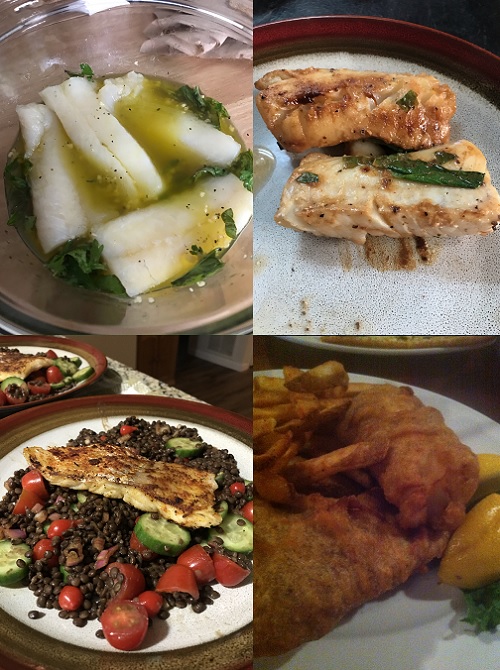
For my dip back into the Atlantic waters for this Bite, I had cod prepared a few ways. The fried type is always good with a dash of vinegar or two, but I also wanted some straight-up grilled cod, so I marinated it, then threw it on the stove with some seasonings. It was fairly tasty just on its own, but I also made sure to make it the star of an actual dish, for which it was served with vegetables and rested on a vast bed of lentils.

Cod will never be my favorite type of fish, but it's certainly earned its place in the pantheon of American foods, and as a light springtime dinner, it can really hit the spot.
Read more »

American Plate - Bite #83: Iceberg Lettuce

Sunday, January 9, 2022 0 comments

Several of the Bites in this project are representative of tastes acquired by the masses through the weight of history, but that have fallen out of favor in modern culinary discussions, and today's is no exception. Take a stroll in any grocery store produce section, and you'll see a vast array of leafy greens, packed with flavor and vitamins. Salads are no longer limp, dull bowls of mediocrity, eaten only by people looking to drop a few pounds. But there's still a holdover from those days, and it comes in the form of iceberg lettuce. This ultra cheap variety is virtually flavor-free, and far less nutritious than other lettuces and it is still, somehow, the top seller in American markets, holding 60% market share. How did it come so far when it tastes so unremarkable?

Lettuce itself is, of course, not American. It's been cultivated since the days of Ancient Egypt. Iceberg lettuce is American, though. It was developed in 1894 by W. Atlee Burpee & Co., who named it after it's icy pale color and temperature requirements needed for shipment. After World War II, America developed the technological capability to ship it anywhere in the country, and extend its shelf life. Iceberg's popularity skyrocketed, and has never come back down again.

Iceberg lettuce also found itself in the crosshairs of a political movement, when United Farm Workers staged a boycott in 1972 until working conditions improved. From then, it's coasted into modernity on being inexpensive and crisp.


There are worse things I could have to eat for the American Plate project, but honestly, is anyone ever in the mood for iceberg lettuce? The salads I made with it had to be topped with a myriad of seeds, dressings, meats, and cheeses to make any kind of serviceable lunch. If you want to add some crunch and roughage to a taco or hamburger, it's the cheapest way to do so, but if you're actually looking for greens with flavor, you should look elsewhere.

Read more »

American Plate - Bite #83: Coca-Cola

Tuesday, July 13, 2021 0 comments

Though it's been interesting to read about the history of the foods and drinks in this book, this entry is a good reminder that no matter how fascinating they may be, and no matter how tasty they are, or how embraced they are by a local culture, marketing is where the battle for widespread popularity is won. Staples like venison and bananas generate their own word of mouth, but when it comes to actual products, we wouldn't be talking about McDonald's or Jell-o today if they didn't have the teams of people who originally dreamed up the most effective ways to sell them.

Coca-Cola is perhaps the platonic idea of such a product; it wasn't the first soft drink invented, and certainly hasn't been the last. It doesn't taste markedly different than other colas, doesn't look different, and its ingredients don't cause a unique effect. And yet, it's the most famous and widely-available soda in the world.

Like many soft drinks, it began its life as a type of cure-all snake oil. The flavored syrup was invented in 1886 by Dr. John S. Pemberton, who was researching its use as a treatment for opiate addiction. At other points in its past, Coca-Cola was also claimed to cure headaches and impotence, in addition to the usual boasts about providing energy to the exhausted. 

People liked the taste of the syrup when it was mixed with carbonated water, and the product was named after its main flavorings: coca leaves and cola nuts. Coca leaves being the source of cocaine is often laughed about, because who wouldn't become enamored with a drink that gets you literally high? That component was removed by 1903, though. What really sent Coke on its meteoric rise were the people that knew what to do with it.


Ownership passed from a local who expanded the use of Coca-Cola into soda fountains to businessmen who innovated a bottling process that would also expand worldwide. It was sent to soldiers on the front of both World Wars as rations. It was talked up as cheap luxury during the Depression. It was touted as a welcome alternative to booze during Prohibition. 

No matter what was going on in the world, Coca-Cola was offered as a solution. It's little wonder that it has become the behemoth that it is today. Thanks to relatively recent developments in sugar substitutes, when I drink Coke, I generally opt for Diet Coke or Coke Zero, finding the original a bit too sweet for my tastes. I often like to add a splash of lime juice for some added zing. I certainly wouldn't call myself brand loyal, but the marketers across American history have certainly done their job well; it'll always be the first product to spring to mind when the topic of soda is brought up. 

Read more »

American Plate - Bite #5: American Bison

Tuesday, June 29, 2021 0 comments

Most American kids learn about the noble bison/buffalo in their first history classes. Inevitably, they learn about how invaluable a resource they were to Native Americans. The massive beasts generally topped out at 700-2000 pounds, and every part of them was utilized by early native tribes. A species that once dominated the landscape was killed to near extinction, but what those kids in history class might not be learning is that this population crash was not entirely due to over-hunting.

Bison caught diseases from cattle, they were dispatched to make way for incoming railroads, and worst of all, a government policy directing the slaughter of bison in order to force desperate Native Americans onto reservations all contributed to their near disappearance.

Fortunately, we still have bison, not only for a diversity of species, but because they're still a damn fine food source. It's more nutritious than domestic animals such as pigs, cows, and chickens; it's got higher vitamin content, is lower in calories and cholesterol, and their fat does not marble their meat. 

Dried buffalo meat can be incorporated with nuts and berries into pemmican, a sort of early version of a Clif bar. Without access to the warm buffalo fat needed to make that, I had to rely on ground bison meat. At home, I made it into meatballs to serve on pasta, while out at restaurants, bison burgers are a popular choice.

They were both very good, which did not come as a surprise. Bison is easy to overcook, but if you can avoid that, and season it properly, it can be a highly satisfying star of any meat dish.

Read more »

American Plate - Bite #29: Tea and Coffee

Wednesday, June 23, 2021 0 comments

By modern standards, tea is the hot drink of choice for England, China, and many other countries, while America favors coffee. Such was not always the way. As colonists, Americans enjoyed tea just as much as their mother country. Drinking it was not only done to satisfy thirst; the ritual of preparing and serving tea was just as important as the consumption of it.

Then a little thing called The Boston Tea Party happened. Perhaps you've heard of it? At the time (1773), coffee was not an unheard of drink in the colonies. As of the early 1700s, it was already the preferred breakfast drink. The American Revolution came as a heavy blow to tea's reputation. Drinking it was akin to supporting the redcoats, and coffee's popularity surged. Just as now, its use as an energy booster gave it a leg up.

Tea regained some of its clout after the war, but it was another war that would make coffee the dominant hot drink in American mugs. When Union soldiers came home from the Civil War, they were used to having coffee as part of their standard battlefield rations, and saw no reason to stop. Coffee's popularity proliferated from there, and today, it accounts for 83% of all hot beverages consumed in the United States.


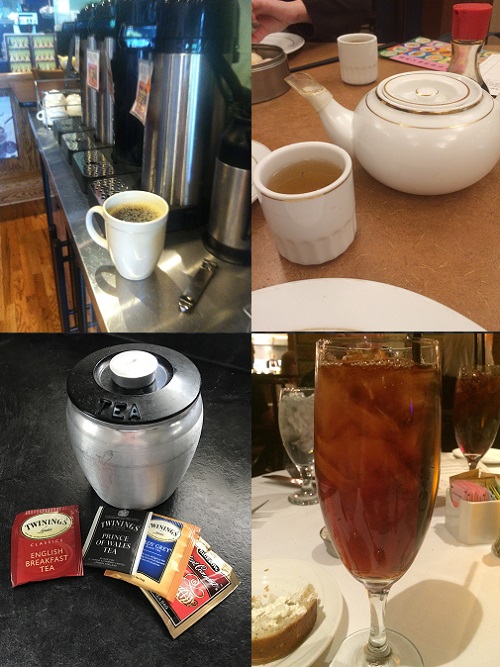
I am certainly contributing to that large percentage. Every workday is kicked off with a mug of coffee, with one or two more throughout the day. I can get pretty irritable without it. I also tend to order it when having breakfast out at a diner or restaurant. That doesn't mean there isn't a place for tea in my heart, too. Hot tea hits the spot when the mood strikes, or if I'm not feeling particularly well. I'm not a huge iced tea drinker, but once in a while, I'll indulge. And then, of course, there's dinner or dim sum at Chinese restaurants, which would feel incomplete without a pot of hot tea on the table.

Read more »

American Plate - Bite #81: Jell-O

Wednesday, November 4, 2020 0 comments

Even though there are plenty of Bites on the list that reach far back into American history and have changed over time, strangely it may be the weird concoction called Jell-O that has gone through the most iterations of use and reputation.

Phase 1: In the eighteenth and nineteenth centuries, animal bones and cartilage were simmered down into a stock that would gel when cooled, forming the basis for a lot of classic French dishes. Rich people were also enamored with transparent fruit gelatins for dessert.

Phase 2: In 1894, Charles Knox developed unflavored gelatin, which could be sold door-to-door in sheets. Shortly thereafter, in 1897, Pearle Wait invented an instant, fruit-flavored gelatin that his wife May named "Jell-O". As America rolled over into the twentieth century, the Waits sold their patent to Francis Woodward, who decided to take the bull by the horns and declared Jell-O "America's most famous dessert." The gambit worked, and the public took him at his word, boosting sales quickly. It helped that big names like Normal Rockwell (who illustrated some Jell-O ads) and Jack Benny (who plugged it on his radio show) were involved. It even made its way to the White House, where Eleanor Roosevelt had the cook serve molded Jell-O desserts in the '30s.

Phase 3: In the 1950s, Baby Boomers hop in. This is the generation that has brought us those hilarious cookbooks full of incredibly vile concoctions, and it's no surprise that they thought Jell-O was the height of culinary sophistication. Not only was it served at Independence Day celebrations and church picnics, but it made its way into actual recipes to be presented with pride at dinner parties.


Phase 4: In the 1980s, Jell-O was a cheap and colorful way to delight the kids. The cupcake and donut crazes were decades away, and I remember looking forward to trips to Grandma's house, thanks in part to the assumption that there would be a bowl of lime Jell-O waiting for me there.

Phase 5: Aside from its welcome use in Jell-O shots at colleges and parties, and its less-welcome use showing up sweating under lamps at buffet restaurants, Jell-O has mostly faded from the cultural consciousness. 

I wanted to do something more than just whipping up a single flavor, so I did the layer method: Prepare a box of Jell-O, let it set, and then repeat twice so that you get a rainbow effect. I remember I once did this with a full set of six boxes, but went with three this time. Actually, since I used the sugar-free kind, it worked pretty well as a dessert for calorie counters. 

Jell-O may no longer be in the regular dessert rotation in American households, but given how many stages it's gone through, we may well see it surge again. 

Read more »

American Plate - Bite #64: Peanut Butter

Monday, September 14, 2020 0 comments
As with a lot of Bites on the list, peanut butter is one of those foods that can be made in individual batches fairly easily, but required a tech boom to be made on a large scale. Its progression throughout history is unsurprisingly steady. In 1884, Marcellus Gilmore Edson got a patent for peanut paste, and in 1895, John Harvey Kellogg got one for the process for preparing nut butters. And of course, there's the most famous peanut booster of all, George Washington Carver, who encouraged peanut crops and peanut butter consumption as both healthy food, and as a way of making small farmers less reliant on cotton. Growing a "self-sufficiency" crop such as peanuts was an immense boon to African American farmers, and peanuts didn't fall prey to the boll weevil, which was destroying cotton crops.
Peanut butter has also been hailed for being very economical in times of poverty, so it flourished again during the Great Depression. Then it got another bump in the post-World War II era, when it became the sandwich lunch staple we all know today. You'd be hard-pressed to claim peanut butter is healthy these days, but that's mostly due to the sweeteners and extra sodium added to the ones you find on the shelves; natural peanut butter is still readily available, and is not difficult to make from scratch.
I don't bother with that, though. I'm a choosy mom, and I choose Jif. Peanut butter is, unsurprisingly, extremely popular in my household, whether it's for sweet or savory snacks. As seen above, I make buckeyes and cookies out of it, and can always heartily enjoy a traditional American PB&J for lunch as well (try it with currant jelly and thank me later). Reese's Peanut Butter Cups are the dominant candy at Halloween, and if all else fails, there's nothing wrong with just eating spoonfuls of peanut butter right out of the jar. Just writing this entry is making me want some right now.
Read more »

American Plate - Bite #84: Pizza

Monday, April 27, 2020 0 comments
As I've no doubt mentioned tons of times, some of the Bites of this project are far easier to obtain than others; I'm still blown away that I was able to get my hands on some beaver tail. There are other entries that will be somewhat challenging to source, but on the flip side, some of the entries are so easy that they can basically be put off until whenever it's most convenient. Say, a global pandemic? Even trapped in our homes, it's no trouble at all to enjoy a Bite that is so common to Americans, it can be found in every settlement in the country. Styles and toppings may differ, but just about everyone loves pizza.

You'd be hard pressed to name a more representative food for America, even if its origin lies in Naples, Italy. So how did it travel from being served to visiting royalty in 1889 to being served on every street corner in the USA? Well, the first pizza parlor was founded in New York City in 1905, but it took until the end of World War II to become a national phenomenon. Soldiers returning from the Italian battlefields told tales of the delicious concoction, and once it caught on with teenagers, it was the hip new snack that every cool kid wanted to eat. It didn't take long to become a commodity for franchise owners, and the marriage of pizza and fast food gave it another popularity explosion.


Different regions celebrate it in different ways, of course, from the deep dish Chicago style to the cracker-thin St. Louis style. I tend to prefer the good ol' fashioned New York style, and when it comes to toppings, I may be one of the few remaining people who love a pizza piled high with delicious, salty anchovy.

Whether it's the cornmeal crust of Pi, the cheesy goodness of La Pizza, or the experimental toppings of Dewey's, there's no shortage of terrific local options. But no matter where in America you call home, there's no doubt a slice of heaven waiting nearby.
Read more »

American Plate - Bite #88: Crème Caramel

Thursday, August 1, 2019 0 comments
Up until now, I've been content to defer to Libby O'Connell's research and expertise on each of the Bites. When it comes to crème caramel, however, the book's entry focuses on the introduction of French cuisine to standard American households via Julia Child's work, and O'Connnell's touching story of crème caramel's role in her own cooking and romantic background. That puts me in a strange position, which I'll get into in a moment. There's no denying that Julia Child had spectacular timing. Nobody can accuse 1950's America of having delectable gourmet cuisine. Child's Mastering the Art of French Cooking opened up a whole new world of elevated food to home cooks all over the country, and The French Chef TV show that followed brought it to an even wider audience. Households that were used to eating nothing but meat and potatoes could now experience the wonders of vichyssoise and potage.

We tend to forget that while Americans have been obsessed with nutrition since the very beginning, treating the act of cooking as an art to be refined and appreciated is relatively modern. The American palate has been getting ever more sophisticated (for food enthusiasts, anyway) since the '60s, and today, there is no shortage of culture aimed at those who appreciate the world of cuisine. Julia Child and the upswing of classical French cooking deserves a lot of credit for this. And like O'Connell, I adore Julia Child. But...


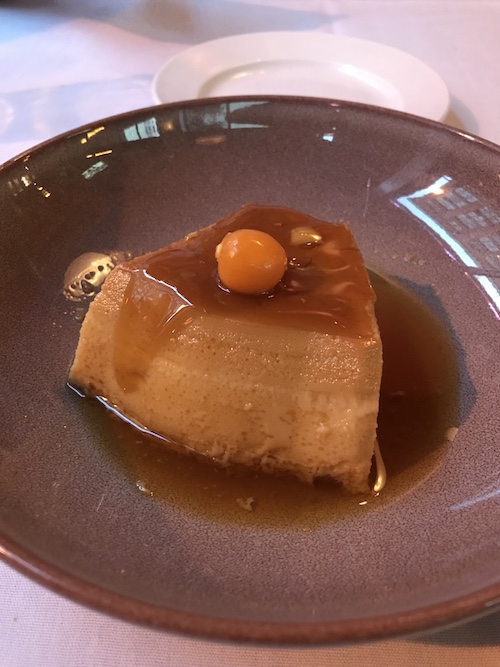
There isn't a word of the crème caramel that refers to anything but French food. No disrespect to its French origins, of course, but I can't help but think that in its current form, crème caramel has switched allegiances. I live in St. Louis, a town founded by Frenchmen and that retains a wealth of French influence in its culture and cuisine. I don't get crème caramel at the local French restaurants, though. I get it at Spanish restaurants. I get it at Mexican restaurants. I get it at Brazilian restaurants. And at all those places, it's not crème caramel at all; it's flan.


If the purpose of this Bite is to celebrate the fact that Americans have expanded access to elevated food, and in particular the deliciousness of this custard and caramel delight, I'm all for it, but we should include a hearty "Gracias" alongside the "Merci" that this book extends.
Read more »

American Plate - Bite #14: Beaver Tail

Monday, July 22, 2019 0 comments
Well, this is surprising. Some of the Bites on the American Plate list are so common that it'd be an event if I didn't eat them twice a week. Some are more specialized, but I know exactly where to go to pick some up. A few present a significant challenge. And then there's beaver tail, for which I fully expected I'd have to skip and substitute something else. I even called it out with some certainty in my initial post as being impossible to track down. Turns out, I was wrong! Tiddy has a list project of his own, which involved stopping by the Soulard Farmer's Market, and lo and behold, one of the vendors there was selling full beaver carcasses, complete with tail. I jumped at the chance, and good thing I did, because the vendor told me I was snagging the last one of the season. Are beavers secretly popular?

The book's entry on beaver tail essentially breaks down into two topics: The fact that people don't really eat this anymore, and a description of the two groups that did, in fact, eat it more out of necessity than anything else. Early Native Americans, of course, had very active lifestyles, and needed the caloric bomb that the fatty beaver tail provides. The other big group was fur trappers, who had to spend the winter out tracking down materials for coats, collars, and hats. Beavers were extremely handy from a trapper's point of view; the pelt could be sold, and the tail could be eaten. Beaver populations actually dwindled in the east because of all this trapping, which helped spur western expansion. Heck, I live in St. Louis, which was founded by fur traders.


Buying beaver was the first step; figuring out what to do with it was the next challenge. The book includes a preparation for grilling the tail, but we had an entire animal on our hands. Lots of internet articles and YouTube videos were consulted. The tail was relatively simple, once the messy work of chopping it off was done. Tiddy did all the butchering work on this one (for which I definitely owe him one), and we took it over to his parents' place. They were excited to be part of the process, and his stepdad grilled the tail on a charcoal grill until the skin bubbled up and I could peel it off. I prepared a quick marinade of Cajun seasoning, butter, and black pepper, and we brushed it on the meat and re-grilled until it was done.


How did it taste? Well, the book refers to it as "gamey-tasting fat with swampy overtones," and I can't improve on that description. I'm glad I ate it, but am not in a hurry to do it again. As to the rest of the beaver, Tiddy carved off a pound or so, and incorporated it into a gumbo with andouille sausage and other Cajun seasonings. Served on rice with some corn on the cob on the side, it was pretty damed tasty! Again, probably not worth the work of carving up a rodent, but made for a decent lunch, and a fascinating experience.

Read more »

American Plate - Bite #36: Spanish California Rabbit Stew

Friday, January 18, 2019 0 comments
One of the nuances of the American Plate Project is how readily available each of the Bites is. It's pretty simple to get my hands on a hot dog or a banana, but things like Lincoln's favorite cake and lamb's quarters will probably come later in the process. Once in a while, though, I get a shot at one of the more esoteric items on the list, and fortunately, the stars aligned this past week to get to one of the most niche Bites in the bunch.

American history is full of stories about the colonies and the Civil War, but we'd do well to teach more of the history surrounding our expansion. Around the 1830s, a steady stream of wagon trains set out west, with pioneers settling vast swaths of land. Of course, some of that land was already occupied, but that sure didn't stop anyone. Encouraged by President Polk, Congress delcared war on Mexico in 1846, and over the next several years, the United States acquired loads of territory, be it by invasion, annexation, or purchase.

As with many stories of conquest, the new citizens and the existing ones eventually blended into a single community, which gave rise to a whole new regional cuisine, and eventually the modern Tex-Mex we all enjoy today. We talk about foods that represent America often, but the dishes that were born from the combination of pioneer Americans and Latino citizens are really far more American than a lot of the things we often ascribe national identity to. I'm looking at you, apple pie.

Encarnación Pinedo's 1898 cookbook, El cocinero español, described a lot of these wholly American creations melded from Old World and New World influences. As hares were plentiful in the Southwestern region (and still are), they were a very popular protein to cook with, and Pinedo included multiple ways of stewing them in her book. Of course, the recipe needed some slight adaptation from its 1898 version, which read:

"Cut the rabbit in small pieces. Fry in very hot fresh lard with small pieces of pork fat. Fry over a quick fire, and when it begins to brown, add some chopped onion, garlic, and salt. Let it cook. Then add tomatoes, olives, chopped mushrooms, one or two spoonfuls of flour, and powdered oregano. Cover it with a chile sauce, leaving the casserole covered, and cook it over a moderate flame."


The American Plate provided an udpated recipe for Rabbit in Chile Sauce, and what better time to prepare it than a snowy winter's eve? I definitely still need some practice in butchering meat; the rabbit may have come pre-skinned, but I'm not great at separting a carcass into its component pieces. There was lots of chopping to do, too. As with every recipe, I put in more garlic than is called for, and popped open my last bottle of red wine for the sauce. I don't like the texture of mushrooms, but they add nice flavor, and I wanted to stay authentic to the recipe, so I included them as big chunks instead of minced pieces so I could eat around them. I'm glad that the updated recipe retained the olives, too. They added a very nice bit of salty brine to the stew.

The weather was bad enough that I didn't go out for extra accompaniments such as bread or green vegetables, so I just served the stew on wild rice, which worked out pretty well. Both Tiddy and I enjoyed it a lot, though eating a heavy stew with a glass of red wine meant I was passed out on the couch half an hour later. That's something those Southwestern pioneers sure didn't have the luxury of doing.
Read more »

American Plate - Bite #75: SPAM

Sunday, January 13, 2019 0 comments
Americans like to romanticize the humble meals of other counties, but we have plenty of humble ingredients, ourselves. Nobody could ever accuse SPAM of being upscale, but it's been consistently popular since its inception by Hormel in 1937. Named for its components (Shoulder of Pork and Ham), it made its debut at just the right time. Fresh meat was too expensive during the Great Depression, and when WWII kicked off, SPAM was perfect for use in the military as well. Rationing and the short shelf life of certain foods meant that people needed cheap, long-lasting items for their bare pantries, and SPAM fit the bill.

Convenience is not the only thing that sold it, though. As the US military moved from country to country during the war, other nations also started developing a taste for it. It remains popular in places like Korea, Guam, and the Philippines. SPAM also made up a large part of the diet fed to the Japanese American citizens unfairly interned in camps during the war, but when they left, they kept it in their recipe books; SPAM-based sushi (called Spam Nori) is still eaten today.

It even became something of a comfort food in Britain, which led to it being lampooned by Monty Python, which may have led to its adoption as a term for junk email. Wild ride, huh?


It's trendy to criticize SPAM, and while I wouldn't serve it at a dinner party, I share a kinship with some of those citizens just trying to fill up on an inexpensive, easy dinner sometimes. Many a night when I'm trying to pinch pennies, I can turn to a can of SPAM, fry it up in butter and spices, and mix it into a bowl of scrambled eggs. It's not fancy, but it's hearty and simple - two qualities that Americans pride themselves on.
Read more »

American Plate - Bite #22: Doughnuts, Waffles, and Cookies

Thursday, September 27, 2018 0 comments
The Bites in this project roughly split into two origins: Native Americans and immigrants. The natives contributed things like maize and venison, while immigrants brought over wonderful things like tostadas and sushi.

For today's entry, we must thank the Dutch that founded the region around New Amsterdam in current day New York. Though they didn't invent these sweets, one could make a strong argument that they perfected them. Cookies wouldn't be what they are today if the Dutch hadn't infused them with the spices they controlled, and the tradition of shaped cookies served at the holidays come directly from their tradition of pressing the dough into molds.

They brought waffle irons to the colonies, putting them on long rods to hold over a fire, and conceiving countless recipes, incorporating the waffles into dishes both savory and sweet. Everything from the caramel goodness of a stroopwafel to the hearty mixture of waffles with chicken and onion can be attributed to Dutch settlers.

The Dutch also elevated the humble doughnut, dropping balls of stiff batter into pork lard to fry. Originally, they were called "oleykoeks" (oil cakes), and were dusted with sugar and cinnamon. Modern doughnuts with holes arose about two hundred years later.


Today, all three of these goodies are in heavy rotation. Cookies are the only one I really make often at home, but there are plenty of businesses anxious to satisfy the American sweet tooth with these concoctions. The doughnut shop near me serves them with all sorts of interesting toppings, like chocolate heated with Mexican spices or blueberry cheesecake. The cookies pictured come from a store that will deliver them late at night to hungry customers who don't want to venture out (read: drunks with the munchies). The waffles are of a now-departed restaurant that served them both sweet and savory. They got topped with everything from cheese to banana/chocolate to salted honey mustard to barbecued brisket.

When people think "dessert", it's natural for our minds to drift to things like cake or ice cream, but this trio forms an iconic backbone of American eating, and many thanks to Holland for that. Proost!
Read more »

American Plate - Bite #98: American Cheese

Tuesday, May 29, 2018 0 comments
The reputation of a lot of American food is less than sterling. People love to look down their noses at certain foods, and when I say the phrase "American cheese", I can bet that a certain image comes to mind. It can be tough for American cheese to instill the same respect as far as influencing our national cuisine as something traditional like maize, or even ice cream can do. Still, American cheese is woven into the fabric of our nation in myriad ways. Not only is it a symbol of food engineering, but of political policy and the resurgence of a more rustic food movement.

It took hold in this country the same way a lot of other foods did: It was easy to store and resilient. What better way was there for a Plymouth pilgrim to keep milk over the long winter months than by eating it as cheese? It was just the calorie bomb hungry citizens needed. The plethora of grassland for grazing animals ensured that cheese was popular from the very beginning. There actually weren't that many steps between that and cheese so processed that it has to be called "cheese product".

Cheese was mostly made, bought, and sold as a farm product until 1851, when Jesse Williams and his son opened the first cheese factory. Its commercial use took off, and in 1916, James L. Kraft patented what came to be known as the Kraft American Single. The main customer was the military, but it was soon discovered that the public would eat it up, too. It melted well, and was produced more "cleanly" than farm cheese, so Americans were soon lining up to pay more for inferior cheese. This trend continued, culminating in the invention of Cheez Whiz in 1952, a product so full of additives that it doesn't contain an iota of actual cheese.

The reputation of American cheese was not improved in the 1970s, which saw the creation of the Dairy Price Support Program. Giving governmental assistance to dairy farmers led to a glut of cheese that was given out in the 1980s to needy families; hence the phrase "government cheese".


Things started to change with the uptick of interest in the culinary world. People began to remember the good ol' days of eating real cheese, and a new generation of higher class American cheeses started to appear. From Vermont cheddar to the goat cheeses of California, American cheese is now something discussed in the same circles as expensive wines.

I wanted to be sure to taste a range of what American cheese had to offer, so as you'll see in the picture above, I visited both ends of the spectrum: After snacking on a few slices of Kraft singles, I bought a wedge of some pretty expensive Humboldt Fog, which made my taste buds sing with happiness.

Though cheese is eaten all over the world, it has come to symbolize so many different things in American culture, from ethics in food production to a sense of socioeconomic status. It helped colonists survive the winter and helped poor Americans survive unemployment. It gives us a lot to think about as we spear a cube of Colby Jack with a toothpick.
Read more »

American Plate - Bite #44: The Rise of Thanksgiving

Monday, November 27, 2017 0 comments
Are American schoolchildren still sold the myth of Thanksgiving? Are they still being taught that colonists took a break from ransacking land from and committing violence against the Native American population to sit down for a jolly meal together in 1621? I feel like the truth has caught on in the popular consciousness, and that Thanksgiving is celebrated in a far more modern context these days, which is all to the good.

Of course, a lot of time passed between the 1600s and now, so how did Thanksgiving really catch on? Celebrating it in late November is nothing new; having a post-harvest feast made all kinds of sense in our early agrarian society. However, the day of said feast was up to each individual governor. Such was life until the lead-up to the Civil War, when a ladies' magazine editor named Sarah Josepha Hale began to campaign to make Thanksgiving a national holiday, in part to help heal how divided and factional the nation had become. Good thing that doesn't happen anymore!

Hale got her wish in 1863, when Abraham Lincoln cemented Thanksgiving into the American calendar. The North took to it immediately. It was a celebration not only of bounty, but of a rapidly expanding economy. Though the war was far from decided, they were feeling pretty good about themselves, and Thanksgiving helped commemorate that. The South turned their nose up at Thanksgiving, associating it with Northern politics. They weren't entirely wrong; there was a huge push in the North to bring Thanksgiving to all the Union fighters, and masses of food were sent by civilians to keep the soldiers' spirits up.

After the war, Thanksgiving continued its spread across all of the states, until it became the bedrock of autumnal American holidays. History is still being made with Thanksgiving, as the plight of Native American populations has become part of the national discussion, and the feast has become more about recognizing our own personal gratitude than anything having to do with patriotic avowals. It's even spreading beyond the family circle, as "Friendsgivings" have continued to gain popularity.


My own Thanksgivings vary wildly. Sometimes, it's a large family gathering. Sometimes, it's a small dinner for two. Sometimes, it's dinner out at a restaurant serving a Thanksgiving meal. It's definitely one of my favorite meals of the year, and not just because it's laden with symbolism and history. It's simply got some of the best culinary components available. Roast turkey? Delicious! Stuffing? Delicious! Corn casserole? Delicious! Green beans? Delicious! Pumpkin pie? Delicious! Cranberries? Those...exist, too!

This year, there was an incredibly wide range of eating, as you can tell from the pictures. First, there was a traditional-type meal at my mom's house. Turkey, stuffing, etc. I made the pecan pie pictured, and did so without using the usual drum of corn syrup. This one used large quantities of eggs as a binder, and as a result, was a much nuttier pie that didn't reek of sweetness. I liked it! You can see that we also have a strange little family tradition in that we have fried oysters on Thanksgiving. I've never heard of anyone else doing that, but I'm certainly not complaining.

The weekend after the main holiday brought two Friendsgivings. The first one featured a fascinating concoction called a meatcake, which you can see above. A cake made of meat that's "frosted" with mashed potatoes? Yes, please! The second Friendsgiving eschewed American tradition by skewing Mexican, including olive-topped enchiladas, carnitas, and my sinful sopapilla cheesecake bars. The holiday obviously has a lot of significance, and not just for family gatherings. It's a time to express gratitude for all that I have, of course, but it's also the time of year to celebrate friendships and to experiment with fun recipes, both of which I cherish.
Read more »